Thanksgiving with a toddler: an easy toddler plate and gentle picky eater tips
A calm, low-pressure plan for the big meal, with a simple plate formula, safe serving tips and what to do when they only want rolls.
This post contains affiliate links. As an Amazon Associate I earn from qualifying purchases, at no extra cost to you.
There is a moment at most Thanksgiving tables when a grown-up leans over and says, kindly, "Is that all she's eating?" And there sits your toddler, with three bites of roll and a fistful of cranberry sauce, while the turkey you carefully cut sits untouched.
If you are already bracing for that moment, I want you to know something: it is completely normal. Toddlers are wary of new foods, their appetites swing wildly from day to day, and a holiday table is loud, late and full of things that look nothing like a usual Tuesday dinner. A toddler who eats very little at Thanksgiving is not failing at Thanksgiving. They are being two.
The good news is that a little planning makes the meal feel easier for everyone. Here is a simple, gentle approach: what to put on the plate, how to serve the classic dishes safely, and how to quietly handle the picky eating (and the opinions) without turning dinner into a negotiation.
Lower the bar for the big meal
Before we talk food, let's talk expectations. The goal for Thanksgiving with a toddler is not a clean plate or trying every dish. It is a pleasant time at the table, a few familiar bites and a child who goes to bed fed and happy.
A few things help more than any recipe:
- Feed them on their schedule, not the turkey's. If the big meal is at 4pm and your toddler usually eats dinner at 5:30, offer their normal snack at the normal time. A hungry, overtired toddler will not suddenly become adventurous.
- Offer a light, familiar snack before you arrive. Not a full meal, just enough to take the edge off so the wait for dinner is not a meltdown.
- Keep it short. Most toddlers can manage 10 to 20 minutes at the table. When they are done, let them be done. Bring a quiet activity or let them help clear their own plate.
- Remember the whole week counts. Toddlers tend to balance out what they eat over several days. One beige holiday meal is not a nutritional problem.
Build a simple toddler Thanksgiving plate
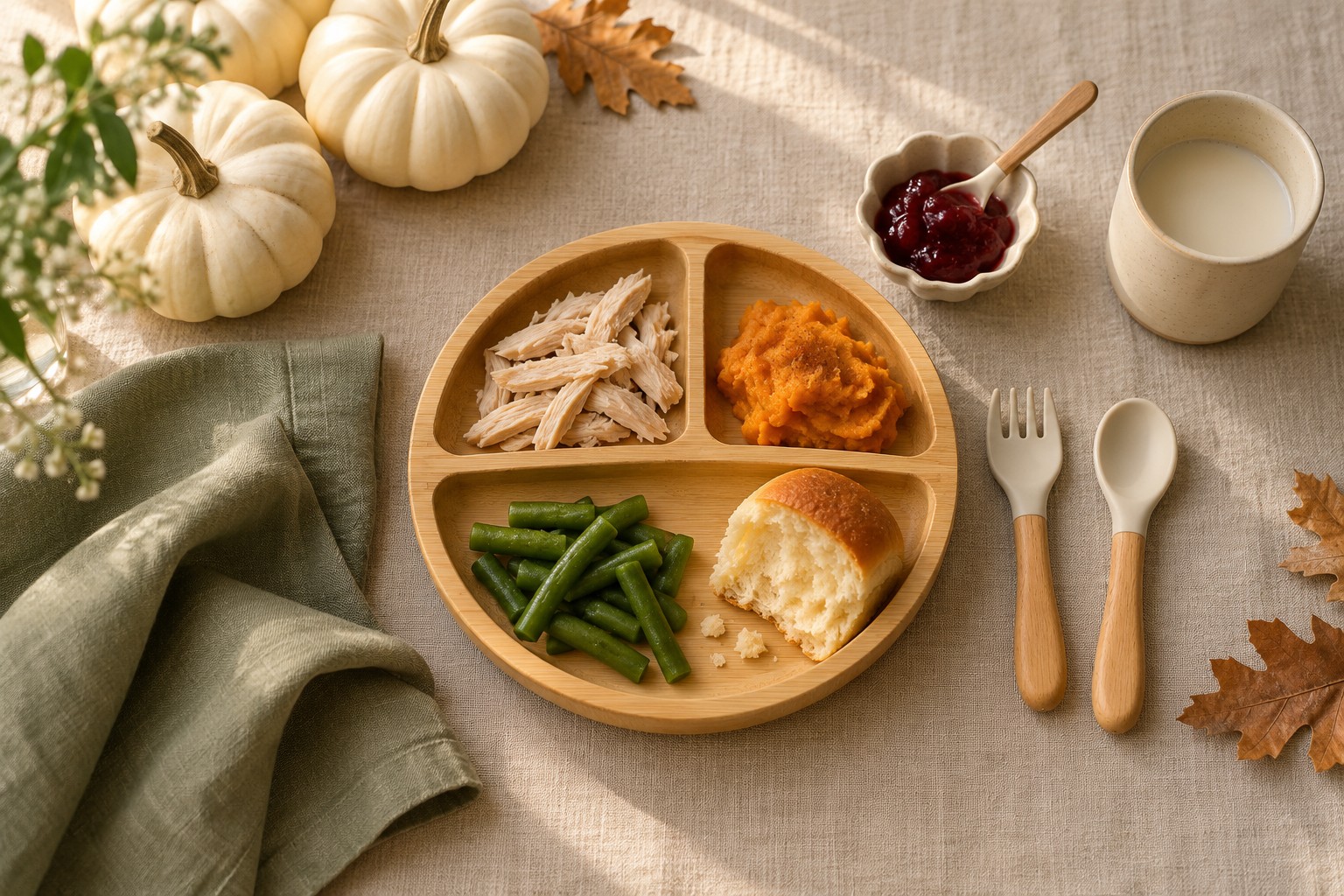
The easiest way to take pressure off is to use what feeding experts often call a "safe food" approach. You put a small amount of a few different foods on the plate, and always include at least one food your toddler reliably eats. That way there is something comforting there, and the new foods can simply sit nearby without anyone insisting.
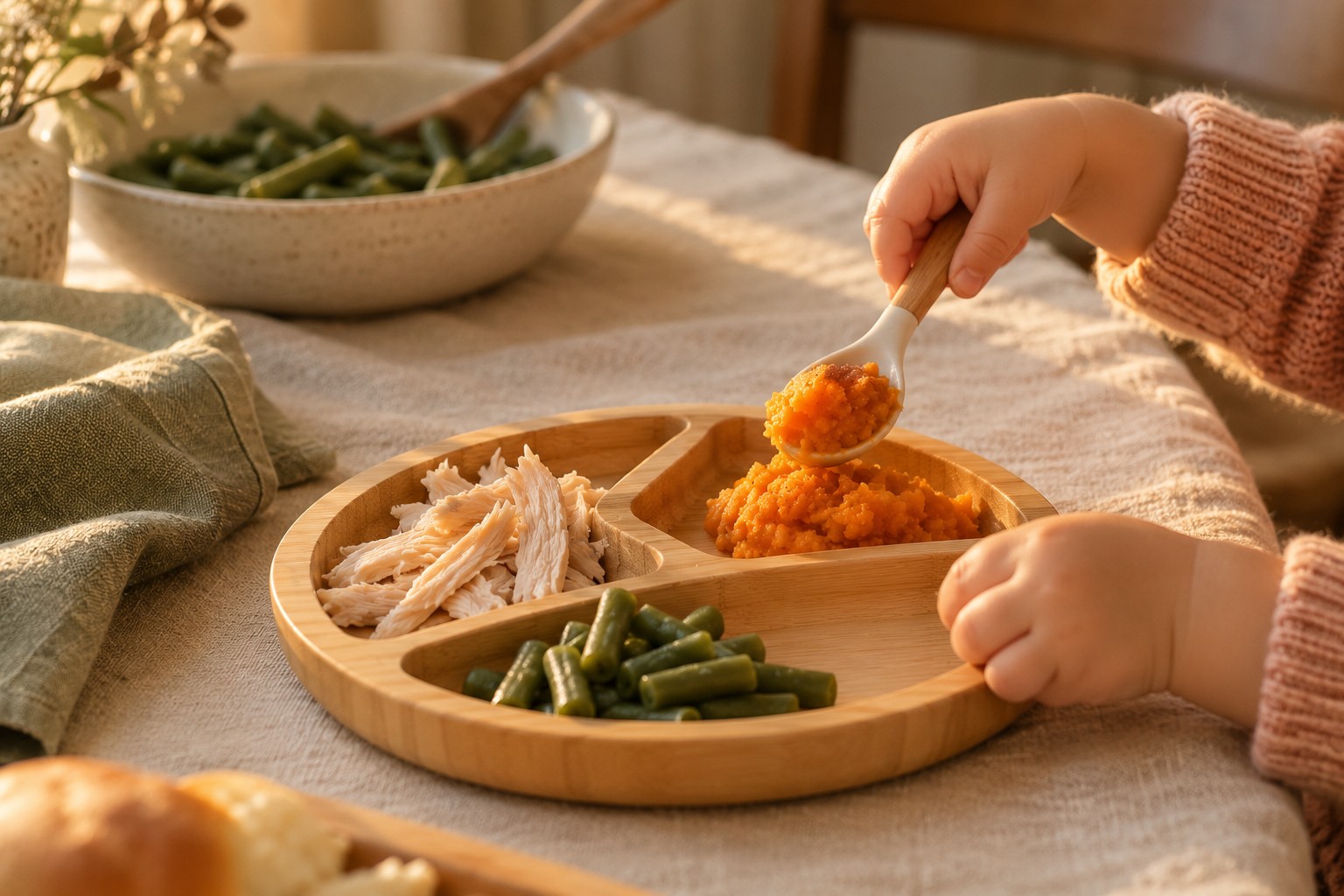
A divided plate makes this feel calm and tidy, and many toddlers like that foods do not touch. A suction plate like this bamboo divided suction plate stays put on a busy table, and child-sized utensils such as the doddl toddler fork and spoon set, designed for 1 to 3 year olds, make self-feeding easier when the adult cutlery is big and heavy.
The four-part plate formula
Fill each section with a small spoonful, about one or two tablespoons. You can always offer more.
- One safe food. A plain roll, buttered noodles, mashed potatoes or whatever they eat almost every time. This is the anchor.
- One protein. Soft, moist turkey, shredded or cut into small thin pieces.
- One fruit or vegetable. Soft-cooked green beans, roasted carrots or mashed sweet potato.
- One "maybe" food. A tiny taste of something new, like stuffing or cranberry sauce, with zero pressure to eat it.
Plate ideas by age
- 12 to 18 months: Soft, mashable foods in small pieces. Think mashed potatoes, mashed sweet potato, finely shredded moist turkey, soft-cooked carrots and a piece of roll. Go easy on salty gravy and very seasoned dishes, and keep honey-glazed anything off the plate for babies under 1.
- 2 year olds: Most can handle more variety, cut small. Turkey pieces about the size of a pea or smaller, soft green beans cut short, a little stuffing and a spoon of cranberry sauce to dip into.
- 3 year olds: Let them have some say. Offer two choices for a section ("green beans or carrots?") and let them serve a spoon of something themselves. A little control goes a long way at this age.
Serve the classic dishes safely
Holiday food is wonderful, but many of the classic dishes include foods that are common choking hazards for children under 4. Mainstream pediatric guidance, including the American Academy of Pediatrics, recommends adapting these rather than serving them as they are. Here is a quick checklist to keep near the kitchen:
- Turkey: Remove all bones and skin, choose moist pieces and cut into very small, thin pieces or shred finely. Dry, chunky meat is hard for little ones to chew.
- Stuffing: Check for whole nuts, dried fruit chunks or sausage pieces. Pick these out or chop them very small, and skip any stuffing with whole nuts entirely.
- Grapes and cherry tomatoes: Cut into quarters lengthwise, every time.
- Relish tray vegetables: Hard raw carrots and celery sticks are not safe for under 4s. Cook vegetables until soft or grate them finely.
- Olives: Pitted and quartered only.
- Nuts, popcorn and hard candy: Keep them off the toddler plate and out of reach. Watch for bowls of mixed nuts or candy on low coffee tables.
- Pecan pie and nut-topped desserts: Scrape off the nuts or offer pumpkin pie instead.
- Marshmallow-topped sweet potatoes: Marshmallows are sticky and can be a choking risk for small children. Serve the sweet potato from underneath and skip the topping.
- Honey: No honey for babies under 1, including honey butter, honey-glazed ham and honey-roasted vegetables.
Always have your toddler sitting down while eating, and keep an adult nearby. If your child has food allergies or you have any feeding concerns, check in with your pediatrician before the holiday, and give the host a quick heads-up about anything your child needs to avoid.
Gentle picky eater tips for the holiday table
Picky eating at Thanksgiving usually comes down to three things: unfamiliar food, an overwhelming setting and a lot of grown-up attention. A few small shifts make a big difference.
- Divide the jobs. A helpful idea from pediatric feeding experts is that grown-ups decide what is offered and when, and children decide whether to eat and how much. It frees you from coaxing and frees them from pressure.
- Skip the bribes and bargains. "Two more bites and you can have pie" tends to make the main meal feel like a chore and dessert feel like a prize. If you are serving dessert, you can simply offer a small piece alongside dinner or afterwards.
- Let them touch, smell and lick. Exploring a new food with fingers is a real step toward eating it someday. A toddler who pokes the cranberry sauce is learning.
- Serve family style when you can. Toddlers are more likely to try something they see you enjoying, and even more likely if they served it themselves.
- Have a calm script for comments. If a relative pushes, try something friendly like, "We're keeping dinner low-pressure, she'll try it when she's ready." Then change the subject. You do not owe anyone a debate over the mashed potatoes.
A little open cup also helps toddlers feel included at the grown-up table. The EZTOTZ tough to tip toddler cup, made for 12 months and up, is short and steady, which is reassuring on a crowded tablecloth.
Let them help in the kitchen
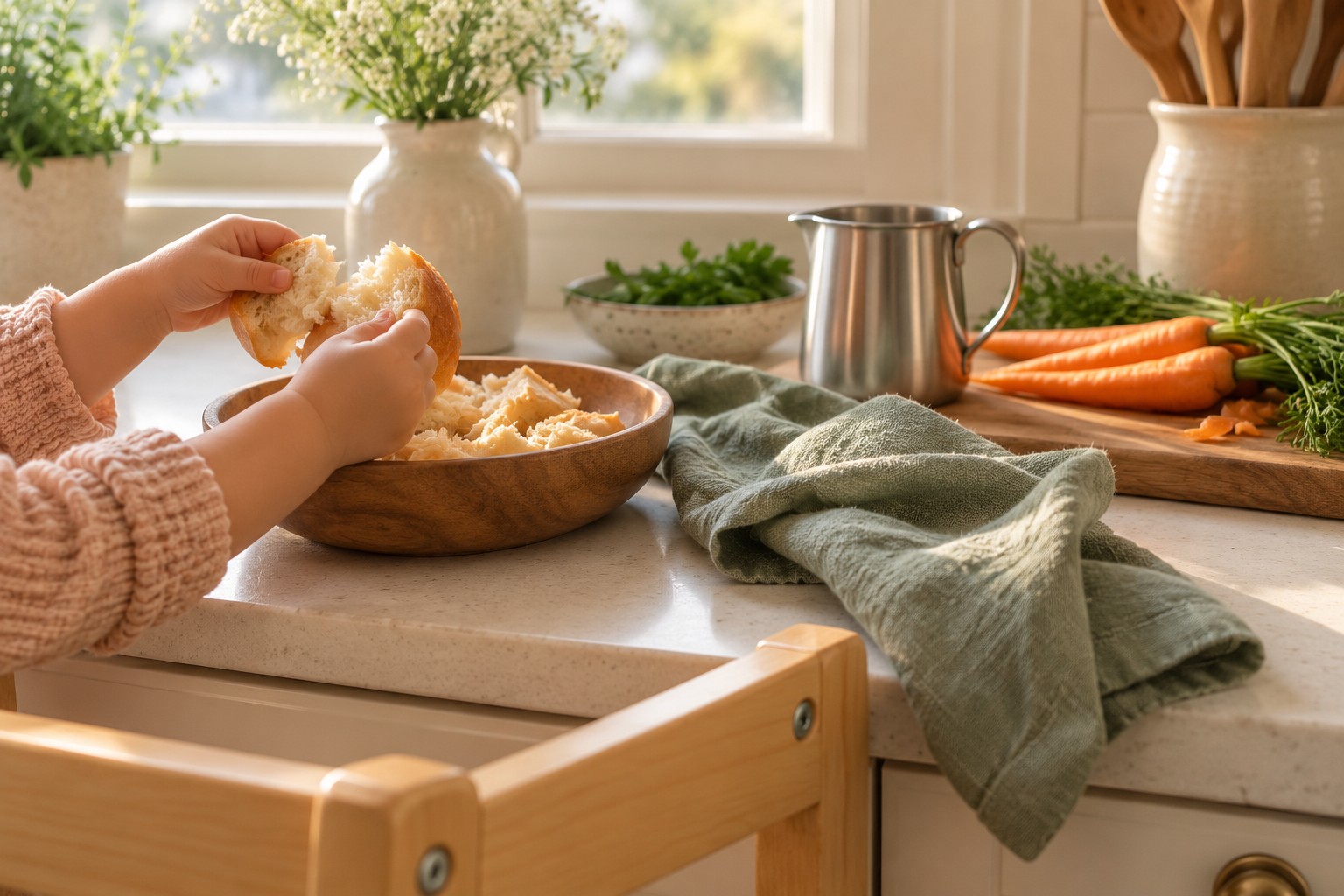
Children are often far more curious about a food they helped make. In Montessori homes this is called practical life, and Thanksgiving week is full of small, real jobs that toddlers love.
Pick one or two tasks that fit your child and your patience level that day:
- Washing vegetables in a bowl of water at the counter.
- Tearing bread into pieces for stuffing.
- Mashing cooked potatoes or sweet potatoes with a masher.
- Stirring cranberry sauce once it has cooled.
- Cutting soft foods like banana or cooked sweet potato with a toddler-safe knife.
- Pouring water for the table from a small pitcher.
- Setting out napkins at each place.
A sturdy kitchen helper means they can see and reach the counter safely. This Dorjee wooden toddler tower adjusts to three heights. For cutting jobs, a set like this kids knife set with cutting board, labeled for ages 3 and up, is made for soft foods, and a little stainless steel Montessori pitcher is just the right size for small hands. Stay right beside them, keep them well away from the stove and hot dishes, and expect spills. Spills are part of learning.
Fill the wait with gratitude and stories
The hour before the meal is often the hardest part. Everyone is busy, the kitchen is hot, and your toddler is hungry and bored. A short, cozy plan helps.
Read together. Find a quiet corner and a couple of gentle Thanksgiving board books. Mouse's Thanksgiving is a playful pick for ages 0 to 3, and Look and Be Grateful by Tomie dePaola is a sweet, simple way to introduce the idea of noticing good things.
Try a tiny gratitude ritual. Toddlers will not understand gratitude as an abstract idea, but they can name things they love. "I'm thankful for Grandma. What do you love?" Their answers might be "trucks" or "my toes," and that is perfect.
Give them a table job. A wipeable silicone placemat can be their own special spot, and setting it out is a job they can own. It also saves the host's good tablecloth.
And once the pie is gone, Christmas is next. If you want a calm way to fill the waiting days, my Christmas Toddler Activity Book has one simple, five-minute page for each quiet moment.
Shop the list
- Bamboo divided suction plate: Keeps foods separate and stays put on a busy table.
- doddl toddler fork and spoon set: Short, easy-grip stainless steel utensils for 1 to 3 year olds.
- EZTOTZ tough to tip toddler cup: A steady open cup for 12 months and up.
- Silicone placemat: An easy-clean spot of their own at any table.
- Dorjee wooden toddler tower: A safe way to help at the counter, with three heights.
- Kids knife set with cutting board: For cutting soft foods with close supervision, ages 3 and up.
- Stainless steel Montessori pitcher: A small, sturdy jug for pouring practice.
- Mouse's Thanksgiving: A playful holiday board book for ages 0 to 3.
- Look and Be Grateful by Tomie dePaola: A gentle board book about noticing everyday good things.
A calm, happy table is enough
Your toddler does not need to try the stuffing or sit through the whole meal for Thanksgiving to be a good one. A familiar food on the plate, a small job to feel proud of and a parent who is not stressed about every bite: that is a lovely holiday for a little one. Whatever they eat, you are giving them a warm, safe place at the table, and that is what they will remember.
If you are planning the rest of the season, you might also like Halloween with a toddler: simple tips for a calm, happy night, full of ideas for keeping big holiday days gentle and short.
Prices change often, so check the current price on Amazon before you buy.